PORTFOLIO - SPORTS TURF DRAINAGE - HOLLINGWORTH ACADEMY
HOLLINGWORTH ACADEMY
Sports Pitch Drainage
Hollingworth Academy in Greater Manchester has been suffering persistent waterlogging on its playing fields since at least 2020, when Turfdry were first invited to assess the issues by the Department for Education, and whilst funding issues delayed the completion of the project for a number of years, Turfdry was ultimately engaged to deliver an overhaul of the site's drainage in the summer of 2025.
Initial Analysis of Sports pitch Drainage Issues
Whilst a comprehensive drainage system had been installed across the site in 2010, its performance fell far short of reasonable expectations, with the pitches regularly sodden and unfit for use. As such, it seemed reasonable that there must be some issue with either the site or the existing system that was diminishing the drainage performance to such a disruptive degree. To this end, Turfdry was engaged to conduct an investigation and produce a report into the pitch drainage, bringing the firm's decades of experience to bear on the troubled site, and help to develop a strategy for effective remedial action.
During the initial assessment of the field drainage, Turfdry identified a number of reasons for the underperforming system at Hollingworth Academy:
- The 80mm perforated plastic pipe drains had been poorly backfilled. Whilst an ideal pipe trench backfill would be 220mm of 4-10mm gravel topped with a 50mm layer of course blinding sand and maximum 100mm of rootzone, the trenches at Hollingworth Academy had 170mm of gravel above the pipe, topped with 200mm of rootzone above the gravel. This seriously impacted the ability of surface water to make its way through the trenches into the pipe drains.
- The secondary system of sand slits was not functional, because the sand slits had been buried by 75mm-110mm of soil. It was theorised that this was due to the sand slits likely having been installed directly after the pipe drains, following which the field was re-cultivated before re-seeding. Sand slits should rather be installed flush to the surface, typically 12 months after the pipe drains, thereby allowing surface water to percolate through the sand slits and connect into the aggregate layer at intersections with the pipe drain trenches.
- With both the pipe and sand slit layers being compromised - essentially having been 'buried', either by improper backfill or ill-advised cultivation works - the existing drainage system's ability to intake groundwater was seriously limited, leading to the issues with waterlogging.
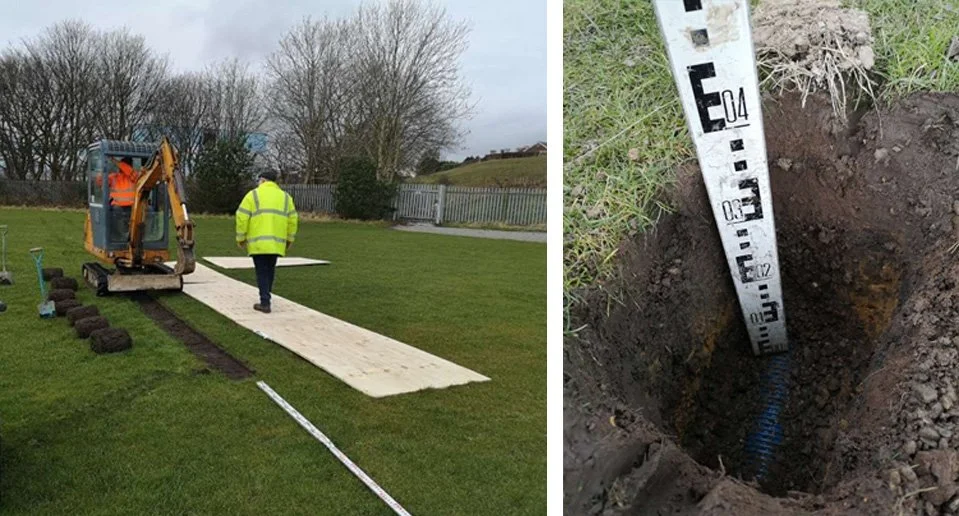
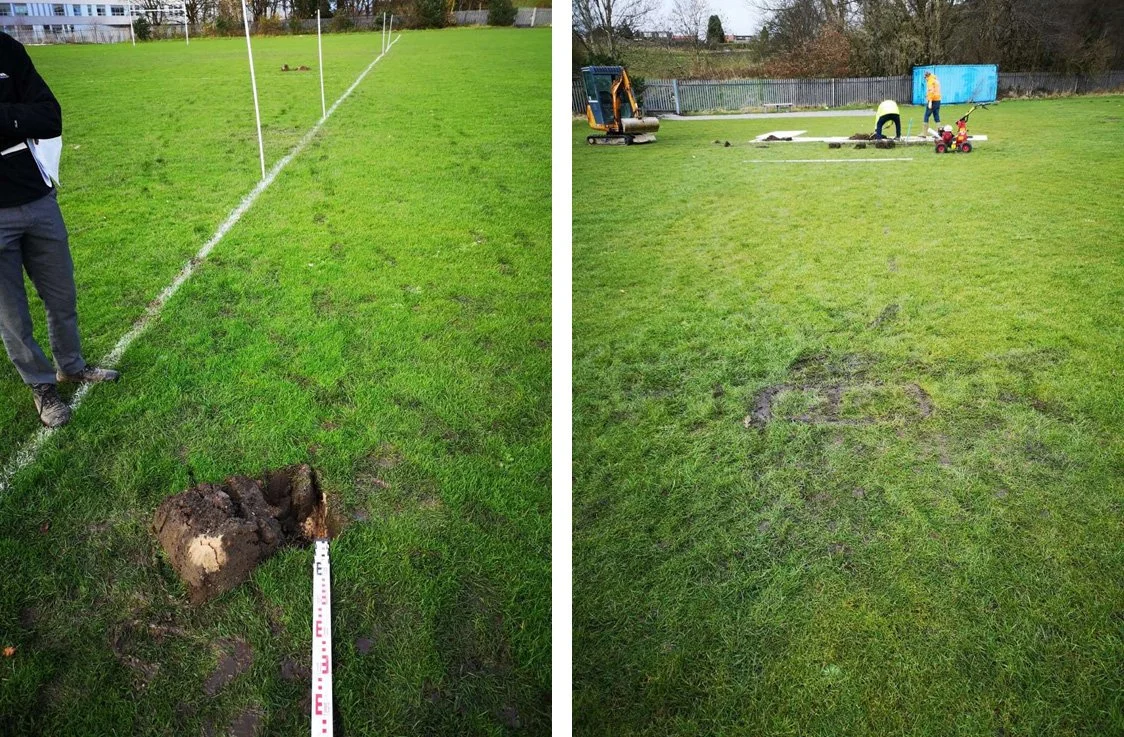
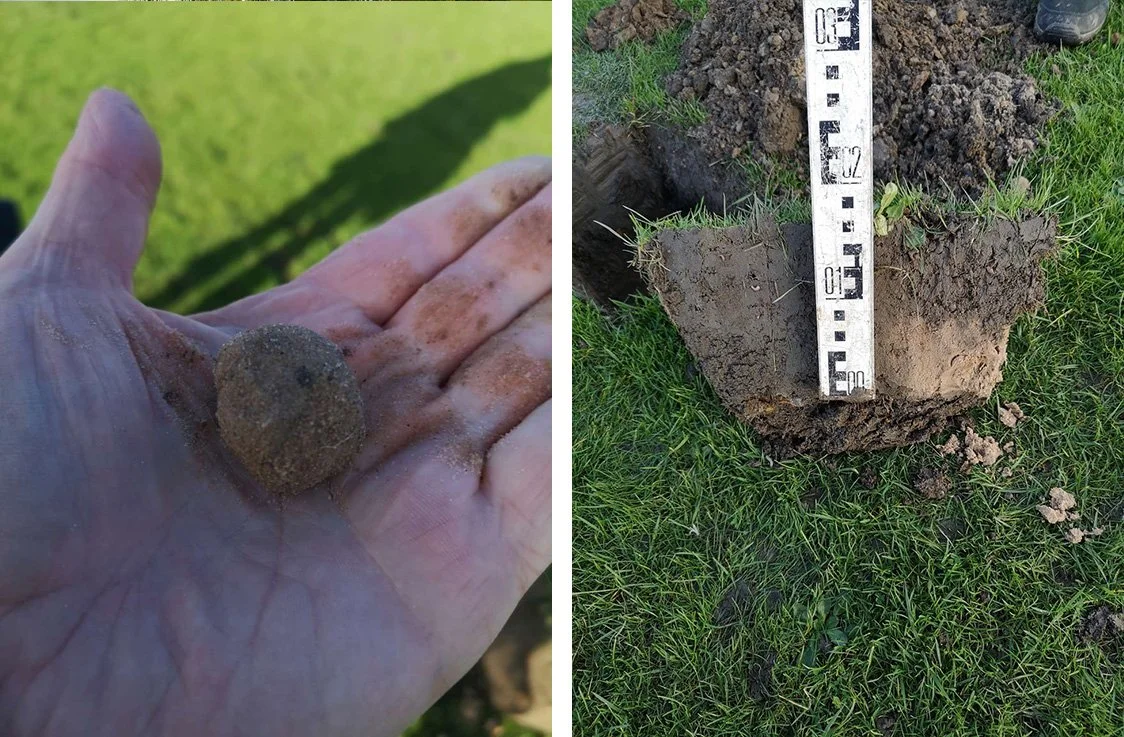
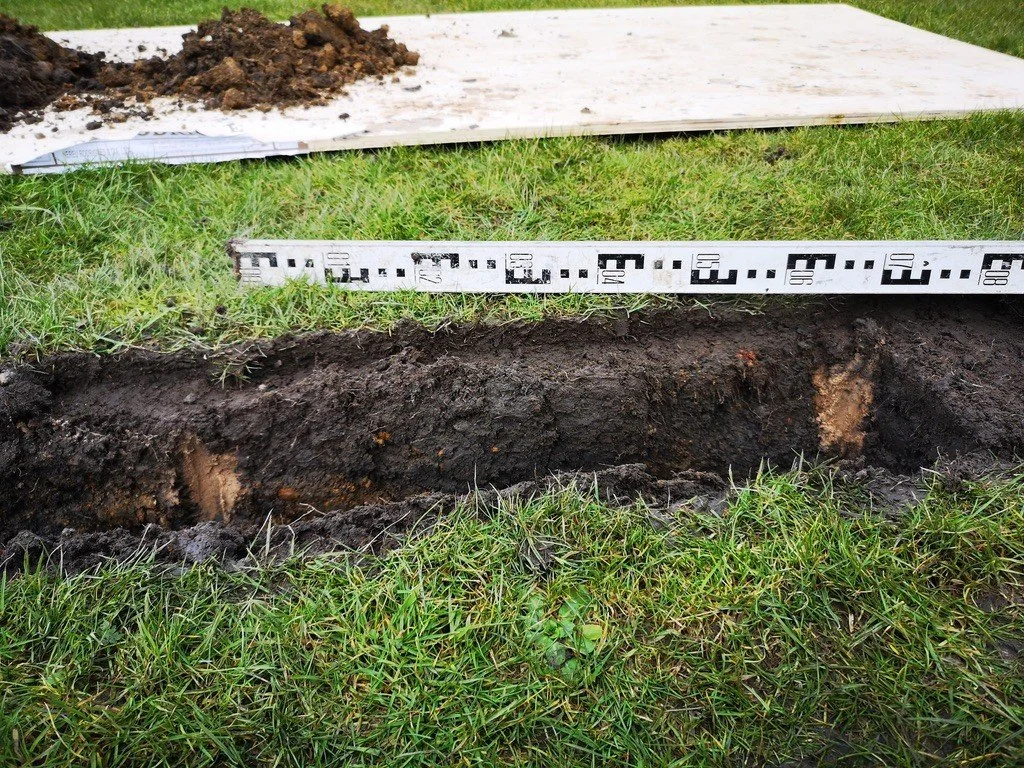
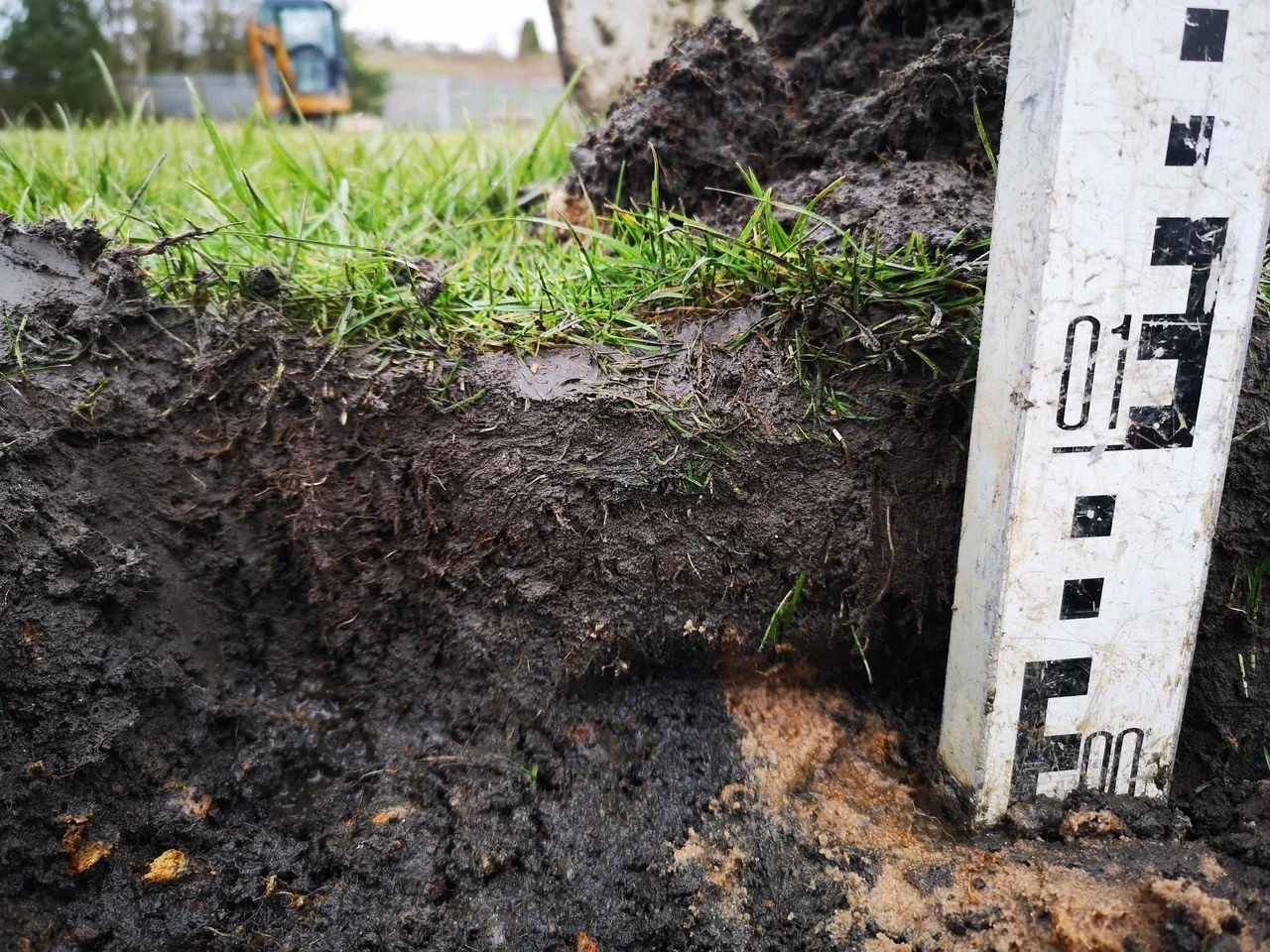
Although Turfdry's report was acknowledged as having successfully identified the issues and likely course of remedial action, progress on the project stalled due to the lack of available funding, leaving the school with waterlogged facilities for a number of years. However, in 2025, Turfdry were contacted by facilities management and regeneration firm Equans, which had been charged with delivering the required improvements to the school's playing fields.
detailed aNALYSIS OF CARRIER DRAIN SYSTEM
This prompted further investigative works, including a CCTV survey of the 'arterial' drainage system of main carrier drains on the site. This revealed that many of these carrier drains - into which the lateral drains connect , and through which collected water is discharged - had been installed without sufficient gradient. As these were perforated plastic pipes, they should have been be installed with a minimum fall of 1:200; this ensures the velocity of the water inside the pipe is sufficient to flush out any silt particles that have made their way into the drains through their perforations, preventing build-up and blockage. With insufficient fall on the pipework, silt will quickly build up inside a perforated pipe drainage system, significantly diminishing the speed at which water can enter and travel through the drains, resulting in seriously compromised drainage performance. Compounding this issue, the CCTV drain survey also revealed that a significant number of the junctions between the lateral and carrier drains had been improperly installed, with lateral drains protruding into the carrier drains, impeding the flow of water through the system further.
Assessment of the existing system was complicated further by the fact that there were several locations where manholes/inspection chambers could not be located, even with the use of CCTV surveying. This was due to the fact that a number of pipes had collapsed, which combined with the improperly installed lateral drains jutting into the carrier network, meant that even the tiny CCTV 'snake' camera could not get through the entire system.
These findings made it clear that the deficinies in the existing carrier drain system were too significant for its remediation, and Turfdry concluded that a new carrier drain system would need to be installed. However, the fact that many of the inspection chambers had been buried - combined with the blockages impeeding internal surveying of the drains usinig CCTV - made it unclear as to how certain sections of the site discharged their water, as there are multiple existing outfall points. Understanding the route by which collected water makes its way to an outfall is crucial in designing an effective drainage network, as the diameter of the carrier drains must be sufficient to cope with the volume of surface water that will flow into it during high rainfall events; otherwise, the system will back up, and fail to prevent waterlogging. This therefore necessitated further investigative works to be carried out once the investigation team was on-site, with the final design for the carrier drain system only able to be completed once the site’s outfall arrangements had been determined through additional excavation and surveying works.
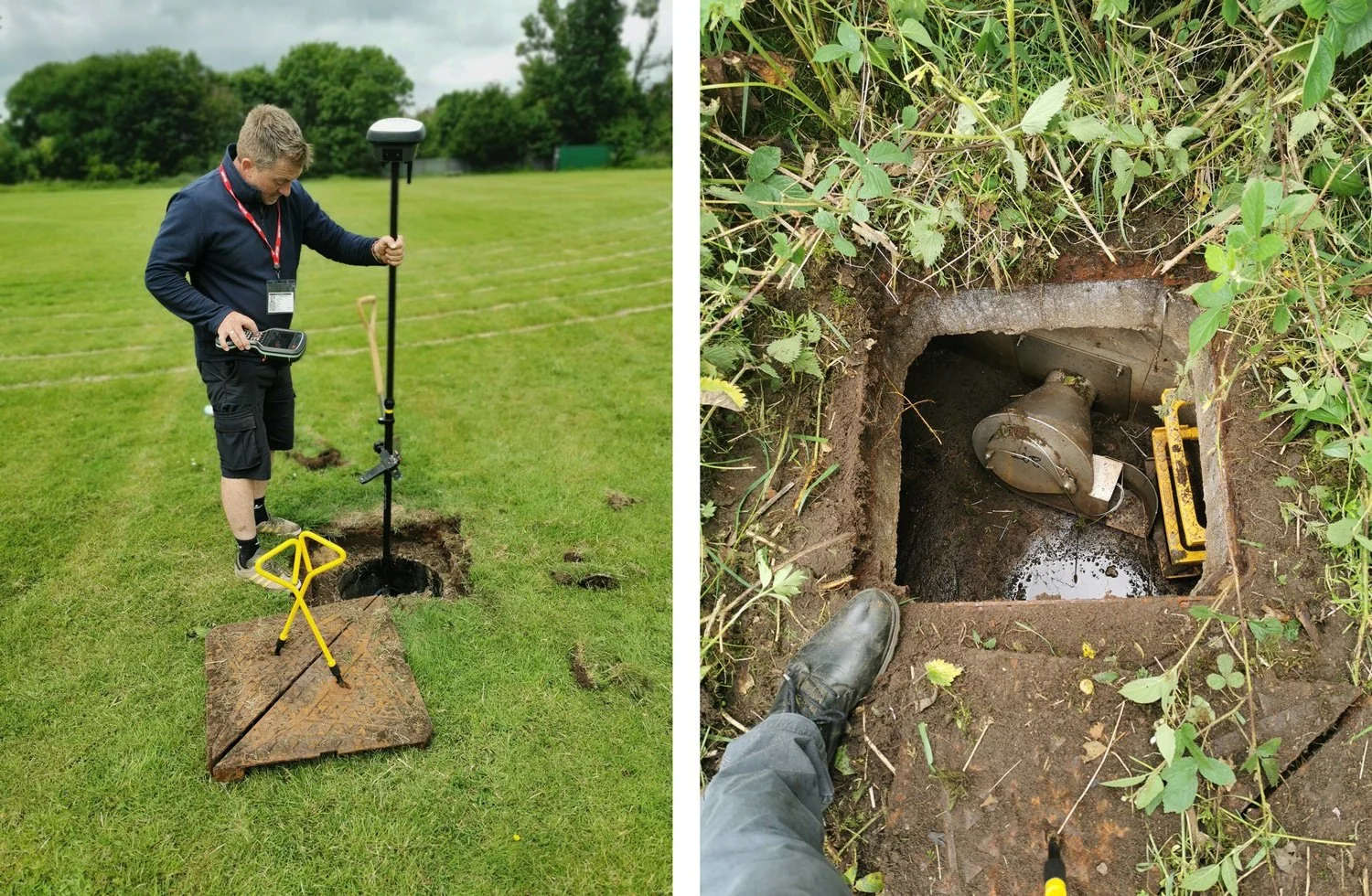
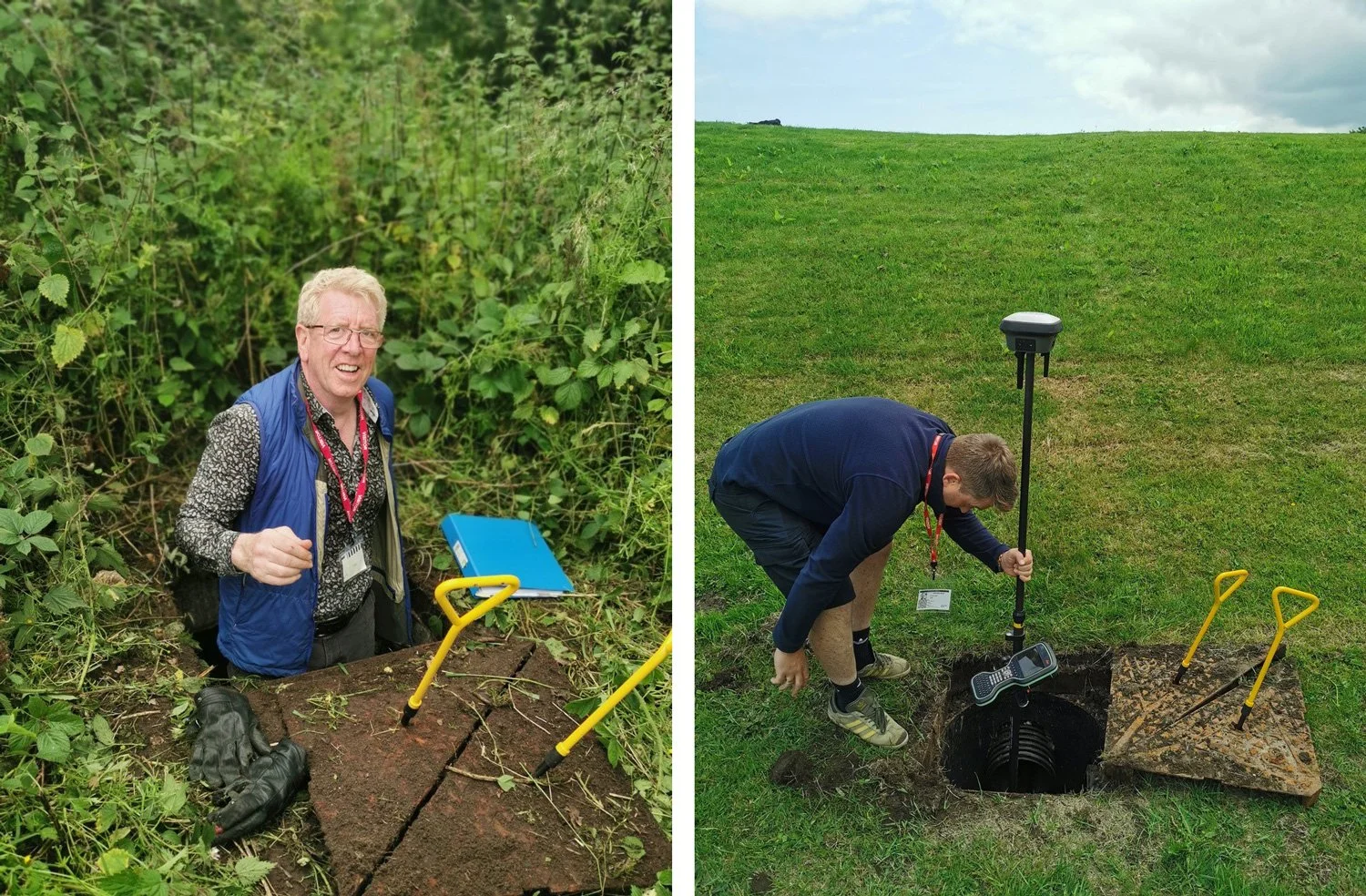
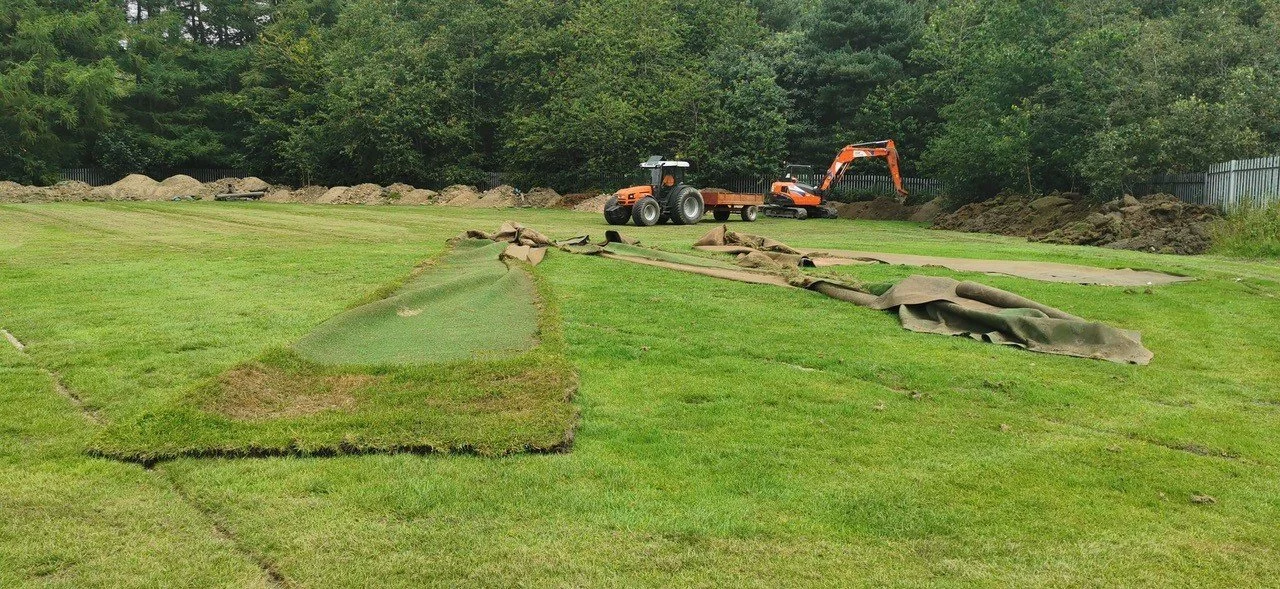
With the carrier drain network now properly mapped, Turfdry were able to break the overall drainage system down into sections, and assess the volume of water that each section of the carried drain would need to cope with in order to provide effective drainage. Analysis of these surface water volumes and the potential maximum gradient of the carrier drain pipes allows for the calculation of the required diameter of carrier pipe for each section of the drainage network, and therefore facilitated the final design for the site’s new carrier drain system.
lATERAL dRAINAGE sPECIFICATION
The remedial programme involved the connection of the existing 80mm plastic pipe laterals into the new carrier drainage, and the installation of new Hydraway Sportsdrain laterals installed in between each existing lateral runs. This resulted in a plastic pipe lateral network at 5m spacing, and a Hydraway Sportsdrain lateral network at 5m, giving an overall spacing of 2.5m across the site.
The spacing of a drainage system is one of the key determining factors in its effectiveness; the Hooghoudt Drain Spacing Equation concludes that any (x) percentage increase int he amount of drainage installed will result in the overall drainage rate achieved by that system being increased by twice that percentage (2x). In the case of the Hollingworth Academy pitches therefore, the amount of drainage installed was increased by 100%, thereby resulting in a 200% increase in the rate of drainage achieved.
This increased in the base drainage rate was compounded further by the use of Hydraway Sportsdrain for the new lateral drains, instead of the conventional 80mm plastic pipe. Due to its unique needle-punched, clog-resistant geotextile outer layer, Hydraway allows water to enter the drain over much greater proportion of its surface area than the perforations of a plastic pipe - without allowing silt ingress. This results in a much higher water intake rate (more than twice that of even a 100mm diameter perforated pipe), whilst preventing blockage through silt build-up - even at minimal gradient.

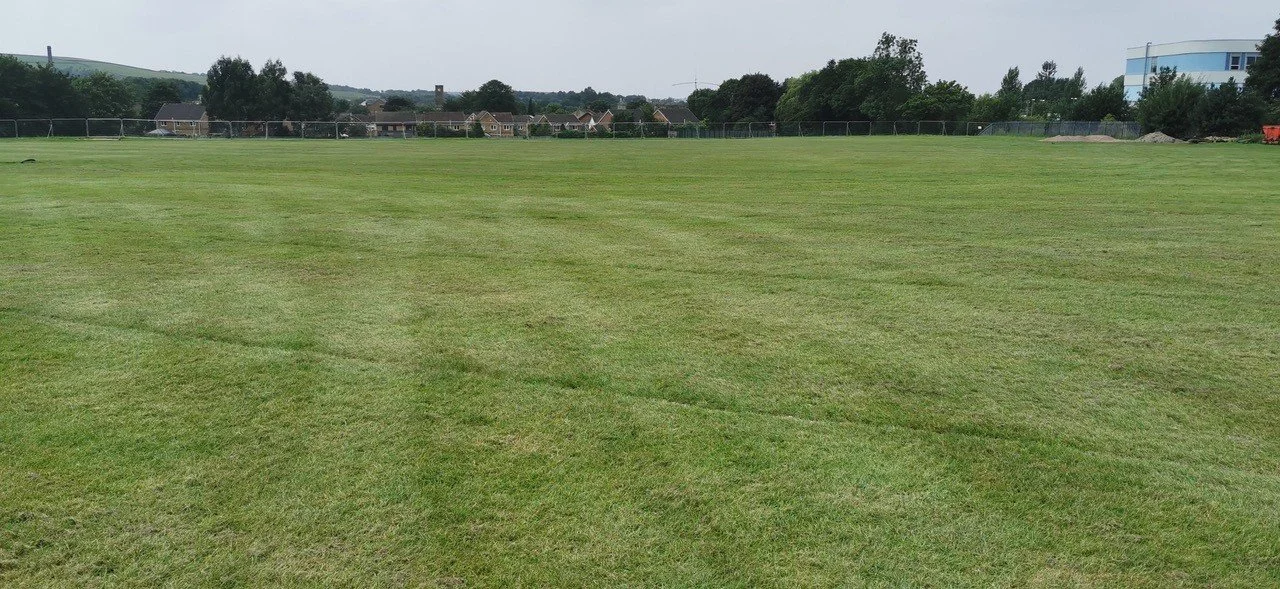
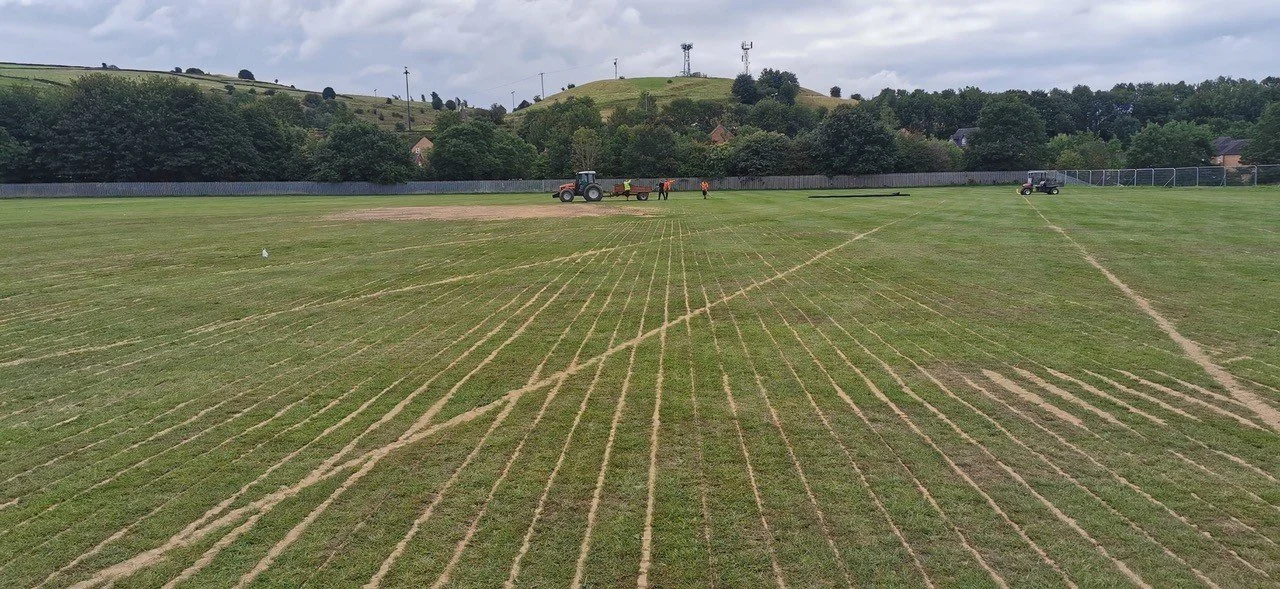
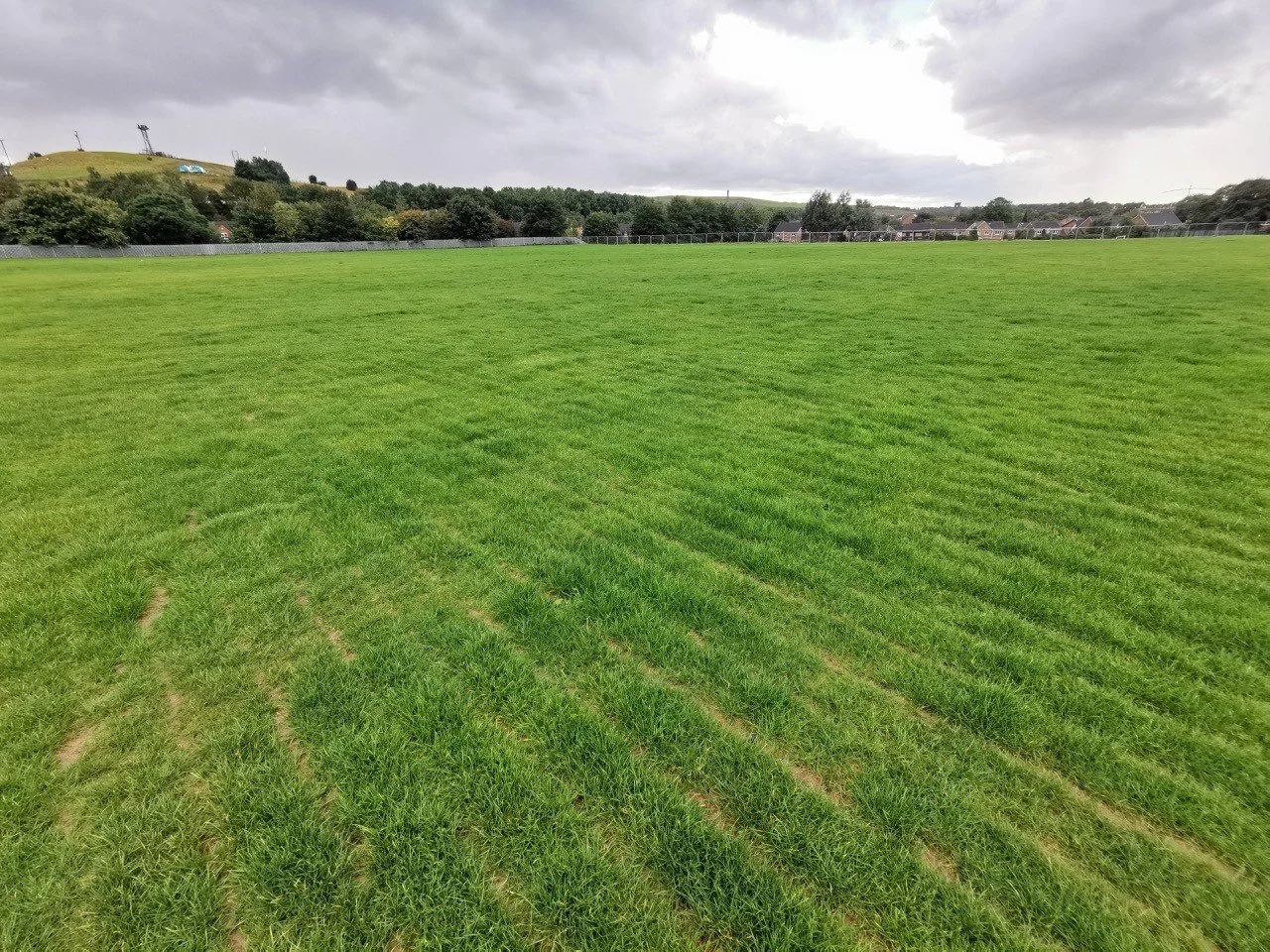
Subsequent to the overhaul of the site's pipe drainage network, a new secondary drainage layer was installed consisting of injected sand grooves at 260mm spacing, perpendicular to the lateral drains to facilitate effective interception of surface water. Finally, the field was topdressed with 340 tonnes of sand and overseeded, to enhance the playing surface following the works.
Despite having taken almost five years to get off the ground, the installation process went well, despite the labour-intensive nature of re-connecting all of the existing drains as well as installing new ones. The significant overhaul of the carrier drain network combined with treatments to the pitch surface should breathe new life into the old drainage pipes, and the bolstering of the system with Turfdry's unique Hydraway Sportsdrain will transform the playability of the field during the winter months.
Project Summary |
Services Provided by Turfdry
AddressHollingworth Academy |